
Health education is far more than a collection of wellness slogans or dietary recommendations. It is an integrative discipline that empowers individuals to understand their physiology, interpret subtle biological cues, and make informed choices that shape long-term vitality. In a society increasingly affected by lifestyle-related conditions, health education offers a compass—guiding people toward resilience, balance, and sustainable well-being.
At its essence, health education cultivates awareness. It teaches how nutrition influences cellular repair, how movement supports circulation, and how emotional states affect hormonal balance. These insights transform abstract science into practical action.
Small habits matter. Deep understanding matters more.
The Expanding Role of Health Education
Modern health education spans a broad continuum: physical fitness, nutritional literacy, mental health, sleep science, preventative care, and environmental awareness. It also embraces emerging fields such as psychoneuroimmunology and epigenetics, highlighting how thoughts, behaviors, and surroundings can influence gene expression and immune function.
This holistic approach acknowledges that the human body operates as a unified ecosystem. Muscles communicate with the brain. The gut signals the immune system. Hormones orchestrate energy, mood, and metabolism.
Health education brings coherence to this complexity.
Rather than offering rigid prescriptions, it promotes bioindividuality—the understanding that each person responds uniquely to stress, diet, and activity. What restores one body may overwhelm another. Through education, individuals learn to observe patterns, refine routines, and personalize their wellness strategies.
Hormonal Literacy: Understanding Cortisol’s Influence
Among the many physiological systems explored in health education, the endocrine network holds particular significance. Within this system, cortisol often takes center stage.
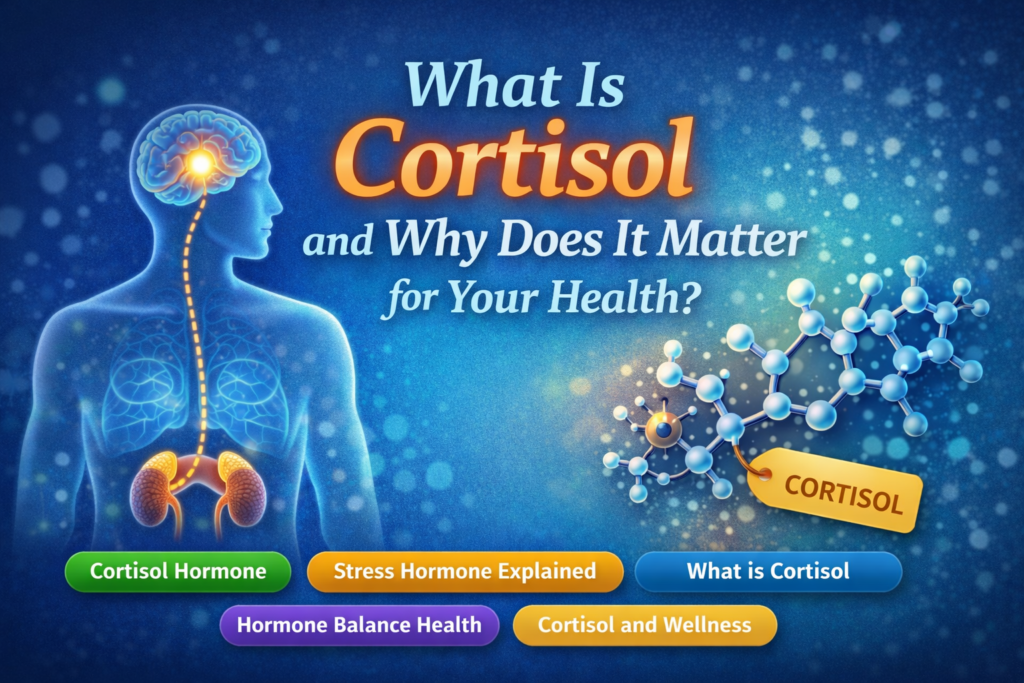
Understanding What Is Cortisol and Why Does It Matter for Your Health? opens a vital doorway into stress biology.
Cortisol is commonly labeled the “stress hormone,” yet its role is far more nuanced. Produced by the adrenal glands, cortisol helps regulate blood sugar, blood pressure, inflammation, and the sleep-wake cycle. In short bursts, it is adaptive—mobilizing energy, sharpening focus, and preparing the body to respond to challenges.
Problems arise when cortisol remains chronically elevated.
Persistent psychological stress, sleep deprivation, and overtraining can keep cortisol levels high, disrupting metabolic balance and immune function. Over time, this hormonal dysregulation may contribute to fatigue, weight gain, mood disturbances, impaired concentration, and increased susceptibility to illness.
Health education reframes cortisol not as an enemy, but as a messenger. Elevated levels signal that the body is struggling to recover.
Listening to that message is essential.
Stress, Lifestyle, and the Cortisol Connection
Daily routines exert profound influence over cortisol rhythms. Ideally, cortisol peaks in the morning to support alertness, then gradually declines throughout the day. Modern life often inverts this pattern.
Late-night screen exposure. Skipped meals. Endless notifications. Chronic mental load.
These factors confuse the nervous system and flatten natural hormonal cycles.
Health education teaches practical methods to restore equilibrium:
- Consistent sleep schedules in dark, cool environments
- Balanced meals with adequate protein and complex carbohydrates
- Gentle morning sunlight to reset circadian rhythms
- Regular physical movement without excessive intensity
- Mindfulness practices to calm the sympathetic nervous system
Short pauses help. Long-term habits heal.
Through these interventions, cortisol can return to its natural cadence, allowing other systems—digestive, immune, cognitive—to function optimally.
Preventative Health Through Informed Living
Reactive healthcare addresses symptoms. Health education prioritizes prevention.
By teaching people to recognize early signs of imbalance—persistent tiredness, digestive discomfort, mood volatility—education enables timely course correction. Small changes made early often prevent more serious complications later.
This proactive mindset transforms health from a crisis response into a daily practice.
Nutrition becomes intentional. Movement becomes restorative. Rest becomes sacred.
Individuals learn to favor whole foods rich in phytonutrients, omega-3 fatty acids, and antioxidants. They discover how hydration supports detoxification pathways. They understand why strength training preserves metabolic health and why walking improves lymphatic flow.
Knowledge turns routines into rituals.
Mental Well-Being as a Biological Imperative
Health education also places significant emphasis on emotional resilience. Chronic stress is not merely psychological; it is biochemical. It alters neurotransmitters, inflames tissues, and impairs immune surveillance.
Techniques such as breathwork, journaling, and contemplative practices are introduced not as luxuries, but as necessities. These tools downregulate cortisol production, enhance vagal tone, and foster parasympathetic activation—the state in which healing occurs.
Stillness becomes therapeutic.
So does connection.
Community-based learning environments reinforce healthy behaviors, creating shared accountability and social support. Humans are inherently relational, and wellness flourishes in cooperative ecosystems.
From Information to Integration
True health education moves beyond information delivery. It emphasizes integration—transforming insight into embodied practice.
Critical thinking is central to this process. Individuals learn to evaluate health claims, interpret scientific evidence, and avoid sensationalized narratives. They become discerning participants in their wellness journey, not passive consumers of advice.
Understanding What Is Cortisol and Why Does It Matter for Your Health? exemplifies this approach. It encourages people to assess their stress levels, adjust daily rhythms, and cultivate recovery practices that support hormonal harmony.
Curiosity replaces confusion.
Agency replaces dependence.
A Lifelong Commitment to Wellness
Health education evolves across the lifespan. Children learn foundational habits. Adolescents explore emotional health. Adults focus on stress management and disease prevention. Older populations prioritize mobility, cognition, and metabolic stability.
At every stage, the objective remains the same: empower informed choices.
Health education is not static. It adapts with new research and personal experience. It grows deeper with reflection. Most importantly, it nurtures a respectful relationship with the body’s inherent intelligence.
Knowledge becomes empowerment.
Empowerment becomes action.
Action, sustained over time, becomes vitality.
In a world of accelerating demands, health education offers clarity and control. It equips individuals to decode their biology, honor their limits, and build lives rooted in balance—where awareness guides behavior, and well-being becomes a living, breathing practice.