
Health education is not merely the dissemination of medical facts. It is a transformative framework that equips individuals with the intellectual tools to interpret their own biology, navigate wellness choices, and cultivate habits that sustain vitality over time. In an era defined by rapid information exchange and lifestyle-driven disease, health education stands as a stabilizing force—bridging science, self-awareness, and everyday practice.
At its foundation, health education promotes literacy. Not only the ability to read labels or follow guidelines, but the deeper capacity to understand physiological processes, recognize early warning signs, and respond proactively rather than reactively. It invites people to become stewards of their own well-being.
Short lessons matter. Long-term understanding matters more.
The Scope of Health Education in Modern Life
Health education spans a wide continuum. It includes nutrition, movement, mental resilience, sleep hygiene, preventive care, and environmental awareness. It also addresses emotional intelligence, stress modulation, and social determinants of health. This multidimensional approach acknowledges that human wellness is not compartmentalized—it is systemic.
Modern pedagogy emphasizes bioindividuality. Each body responds differently to diet, activity, and stressors. What restores one person may exhaust another. Health education respects this variability, encouraging experimentation, reflection, and personalization.
Through structured learning and practical application, individuals begin to see patterns:
- How sedentary habits affect circulation
- How chronic stress alters hormonal balance
- How sleep deprivation impairs cognitive acuity
- How nutrient-dense foods support cellular repair
These insights convert abstract concepts into actionable knowledge.
Immune Literacy: Understanding the Body’s Defense Architecture
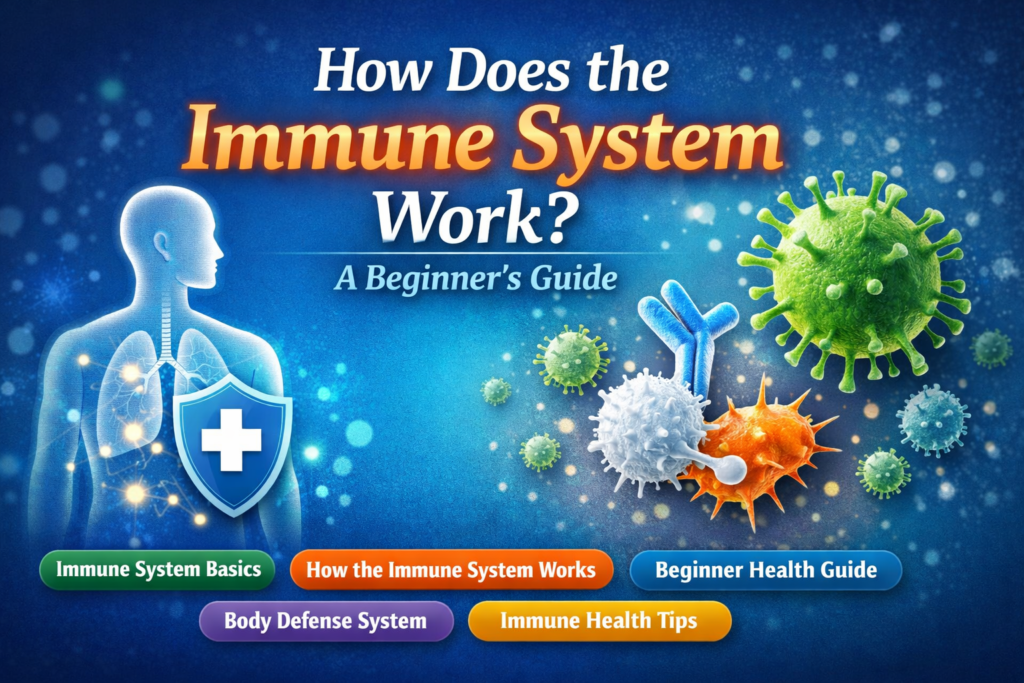
A cornerstone of contemporary health education is immune awareness. Grasping How Does the Immune System Work? A Beginner’s Guide offers a gateway into understanding one of the body’s most sophisticated networks.
The immune system is not a single organ. It is an intricate constellation of cells, tissues, and biochemical messengers working in synchrony. White blood cells patrol the bloodstream. Lymph nodes filter pathogens. The spleen monitors circulation. Cytokines transmit molecular instructions. Together, they form a vigilant surveillance system designed to identify threats and initiate precise countermeasures.
There are two primary branches:
- Innate immunity, the rapid-response mechanism that acts as the first line of defense
- Adaptive immunity, a more specialized system that learns from exposure and builds long-term memory
This biological intelligence allows the body to recognize familiar invaders and respond with increasing efficiency over time.
Yet immune performance is not automatic. It is profoundly influenced by lifestyle inputs.
Sleep regulates immune signaling. Movement enhances lymphatic flow. Micronutrients like zinc and vitamin D modulate cellular activity. Chronic stress, by contrast, suppresses immune vigilance through sustained cortisol release.
Health education translates these interactions into practical guidance, empowering individuals to support their immune system through daily choices.
The Preventive Power of Knowledge
Reactive healthcare treats symptoms. Health education prevents them.
By teaching people how to identify subtle physiological shifts—persistent fatigue, digestive irregularities, cognitive fog—education creates early intervention opportunities. Small adjustments made early can avert more serious conditions later.
This preventative orientation reshapes behavior. Individuals begin to prioritize:
- Balanced, anti-inflammatory nutrition
- Regular physical activity
- Restorative sleep routines
- Mindfulness practices for nervous system regulation
- Reduced exposure to environmental toxins
These are not fleeting trends. They are foundational pillars.
Short walks. Whole foods. Consistent rest.
Simple actions accumulate into measurable outcomes.
Mental Well-Being as a Core Component
Health education also addresses the psyche. Emotional health is inseparable from physical resilience. Chronic anxiety and unprocessed stress activate inflammatory pathways, disrupt digestion, and impair immune response.
Through education, people learn techniques such as diaphragmatic breathing, cognitive reframing, and contemplative practices. These strategies recalibrate the autonomic nervous system, shifting the body from a state of hypervigilance into one of restoration.
Stillness becomes medicine.
So does connection.
Community-based health education fosters shared accountability, reducing isolation while reinforcing healthy norms. Humans thrive in supportive ecosystems.
From Information to Integration
Access to information alone does not guarantee transformation. Integration is key.
Effective health education emphasizes application—how to translate knowledge into routine. It encourages reflection, habit formation, and continuous learning. It promotes discernment in an age of misinformation, helping individuals evaluate sources and distinguish evidence-based guidance from speculative claims.
This critical thinking component is essential. It cultivates autonomy.
People become participants in their health journey rather than passive recipients of advice.
They learn to ask better questions:
Why do energy levels fluctuate?
How does nutrition affect mood?
What signals indicate imbalance?
Curiosity replaces complacency.
Health Education Across the Lifespan
From early childhood through older adulthood, health education evolves with developmental needs. Children learn basic hygiene and movement. Adolescents explore mental health and nutrition. Adults focus on stress management and prevention. Older populations prioritize mobility, cognition, and chronic disease mitigation.
At every stage, education adapts. The goal remains constant: informed decision-making rooted in self-awareness.
Understanding How Does the Immune System Work? A Beginner’s Guide is just one example of how foundational knowledge can ripple outward, influencing behavior, resilience, and long-term outcomes.
A Living Practice, Not a Static Curriculum
Health education is not a one-time lesson. It is a lifelong practice.
It grows with experience. It deepens with reflection. It evolves alongside scientific discovery. Most importantly, it empowers individuals to engage with their bodies in meaningful, respectful ways.
Knowledge becomes agency.
Agency becomes action.
Action, sustained over time, becomes well-being.
In a complex world, health education offers clarity. It transforms awareness into vitality and equips people to navigate life with greater strength, balance, and purpose.