
Health education is not simply about learning how to eat better or exercise more. It is an expansive discipline that teaches individuals to understand their bodies, recognize subtle imbalances, and cultivate habits that support long-term resilience. In a world where exhaustion has become normalized, health education offers clarity—connecting physiology, lifestyle, and emotional well-being into one coherent narrative.
It begins with awareness.
Short lessons help. Deep comprehension transforms.
The Purpose of Health Education in Modern Living
Health education bridges scientific knowledge with practical application. It empowers people to interpret biological signals, make informed decisions, and adopt preventative strategies long before illness takes hold. Rather than reacting to symptoms, educated individuals learn to observe patterns, adjust routines, and optimize daily behaviors.
This approach is inherently holistic. Physical activity affects mental clarity. Nutrition influences immune strength. Sleep governs hormonal balance. Emotional stress reshapes metabolism.
Nothing exists in isolation.
Modern health education embraces this interconnectedness, drawing from fields such as behavioral science, neuroendocrinology, and lifestyle medicine. It also respects bioindividuality—the understanding that every body responds differently to stressors, food, and environmental inputs.
Personalization replaces prescription.
Energy as a Health Indicator
One of the most revealing markers of overall wellness is energy level. Persistent fatigue is not merely an inconvenience; it is a physiological message. Learning to decode that message is a core component of health education.
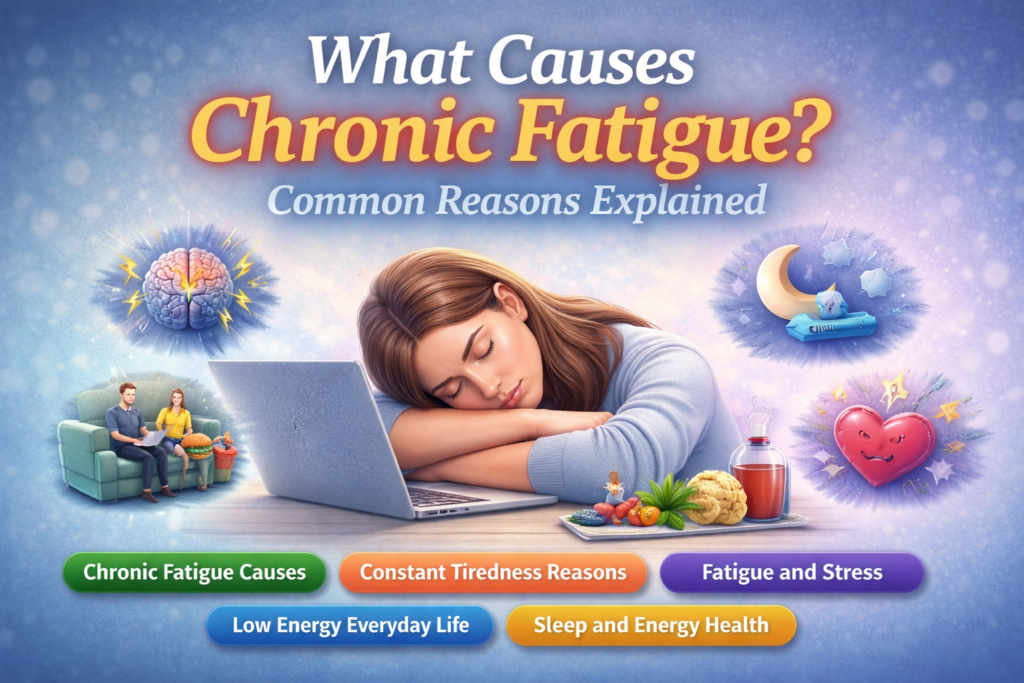
Exploring What Causes Chronic Fatigue? Common Reasons Explained opens a vital window into how the body communicates distress.
Chronic fatigue is rarely caused by a single factor. Instead, it emerges from a constellation of influences that accumulate over time. These may include:
- Sleep disruption and circadian rhythm imbalance
- Nutrient deficiencies, particularly iron, B vitamins, and magnesium
- Chronic psychological stress and adrenal overload
- Sedentary lifestyles that impair circulation and mitochondrial function
- Inflammatory processes driven by poor diet or unresolved illness
- Hormonal dysregulation affecting thyroid or cortisol levels
Each of these elements can quietly erode vitality, leaving individuals feeling depleted even after rest.
Health education reframes fatigue not as weakness, but as feedback.
The body is asking for recalibration.
Understanding the Physiology Behind Fatigue
At the cellular level, energy is produced by mitochondria—microscopic power plants that convert nutrients into usable fuel. When these systems are compromised by oxidative stress, inflammation, or inadequate nutrition, fatigue follows.
Stress plays a significant role here.
Chronic activation of the nervous system elevates cortisol and adrenaline, diverting resources away from repair and toward survival. Over time, this biochemical state disrupts sleep, digestion, and immune response, creating a feedback loop of exhaustion.
Health education teaches individuals how to interrupt this cycle.
Breathing techniques. Gentle movement. Consistent sleep routines.
Small interventions, practiced daily, restore balance.
Lifestyle Factors That Drain Vitality
Health education highlights how modern habits often work against natural biology. Late-night screen exposure suppresses melatonin. Skipped meals destabilize blood sugar. Constant digital stimulation keeps the nervous system in a state of hyperarousal.
These patterns accumulate.
Fatigue becomes chronic.
Through structured learning, people begin to recognize how simple changes can dramatically improve energy:
- Establishing regular sleep-wake cycles
- Prioritizing whole foods rich in micronutrients and phytonutrients
- Staying hydrated to support circulation and detoxification
- Incorporating low-impact movement such as walking or mobility work
- Creating tech-free periods to allow mental decompression
Short walks help. Long-term consistency heals.
Nutrition as a Foundation of Energy
A cornerstone of health education is nutritional literacy. Food is not merely fuel—it is information. Every meal sends biochemical signals that influence inflammation, neurotransmitters, and metabolic efficiency.
Highly processed diets rich in refined sugars and industrial oils promote inflammatory pathways that contribute to fatigue. In contrast, nutrient-dense foods support cellular repair and neurotransmitter synthesis.
Health education encourages the inclusion of:
- Leafy greens and cruciferous vegetables
- Quality proteins for tissue regeneration
- Healthy fats to stabilize blood sugar
- Fermented foods to nourish the gut microbiome
The gut-brain axis plays a pivotal role in energy regulation. When digestion is compromised, nutrient absorption declines, and fatigue intensifies.
Knowledge transforms eating into intentional nourishment.
Emotional Health and Energy Resilience
Chronic fatigue is often intertwined with emotional overload. Unresolved stress, anxiety, and mental fatigue manifest physically over time. Health education recognizes mental well-being as a biological imperative.
Practices such as mindfulness, journaling, and contemplative movement activate the parasympathetic nervous system—the state in which restoration occurs. These tools lower inflammatory markers, improve sleep quality, and enhance cognitive clarity.
Stillness becomes medicine.
So does connection.
Community-based health education fosters shared accountability, reminding individuals that healing thrives in supportive environments.
Prevention Through Understanding
Reactive care treats symptoms. Health education prevents them.
By teaching people to recognize early warning signs—persistent tiredness, brain fog, digestive discomfort—education enables timely intervention. Small lifestyle adjustments made early often prevent long-term complications.
Understanding What Causes Chronic Fatigue? Common Reasons Explained exemplifies this proactive philosophy. It empowers individuals to examine sleep patterns, stress levels, nutritional status, and daily rhythms with curiosity rather than frustration.
Agency replaces helplessness.
Health Education as a Lifelong Practice
From childhood through older adulthood, health education evolves with changing needs. Young learners build foundational habits. Adults focus on stress management and metabolic health. Older populations prioritize mobility, cognition, and sustained energy.
At every stage, the goal remains the same: informed choice.
Health education is not static. It grows with experience. It adapts with new research. It deepens through reflection. Most importantly, it fosters a respectful relationship with the body’s innate intelligence.
Knowledge becomes empowerment.
Empowerment becomes action.
Action, sustained over time, becomes vitality.
In an age where fatigue is widespread and attention is fragmented, health education offers a path back to equilibrium. It teaches individuals to listen to their bodies, honor their limits, and build lives rooted in awareness—where energy is cultivated, not depleted, and well-being becomes a daily, intentional practice.