
Health education is far more than an academic subject or a collection of wellness tips. It is a living framework that empowers individuals to interpret their biology, regulate their emotions, and cultivate habits that sustain long-term vitality. In a world saturated with information yet starved for understanding, health education provides clarity—transforming complex science into practical wisdom.
It begins with awareness.
Small insights matter. Integrated knowledge changes everything.
The Expansive Reach of Health Education
Modern health education embraces a holistic perspective. It explores nutrition, physical activity, mental resilience, sleep science, preventive care, and environmental influences. It also integrates emerging disciplines such as neuroplasticity and psychoneuroimmunology, revealing how thoughts, behaviors, and surroundings shape physiological outcomes.
The body operates as a unified ecosystem. Muscles communicate with the brain. The gut sends signals to the immune system. Hormones choreograph energy, mood, and metabolism. Health education brings coherence to this intricate symphony, helping individuals recognize how daily choices ripple through multiple systems at once.
Central to this approach is bioindividuality—the recognition that each person responds uniquely to stress, food, and movement. What revitalizes one individual may exhaust another. Through education, people learn to observe patterns, refine routines, and personalize their wellness strategies.
Prescription gives way to perception.
Nervous System Literacy: The Architecture of Experience
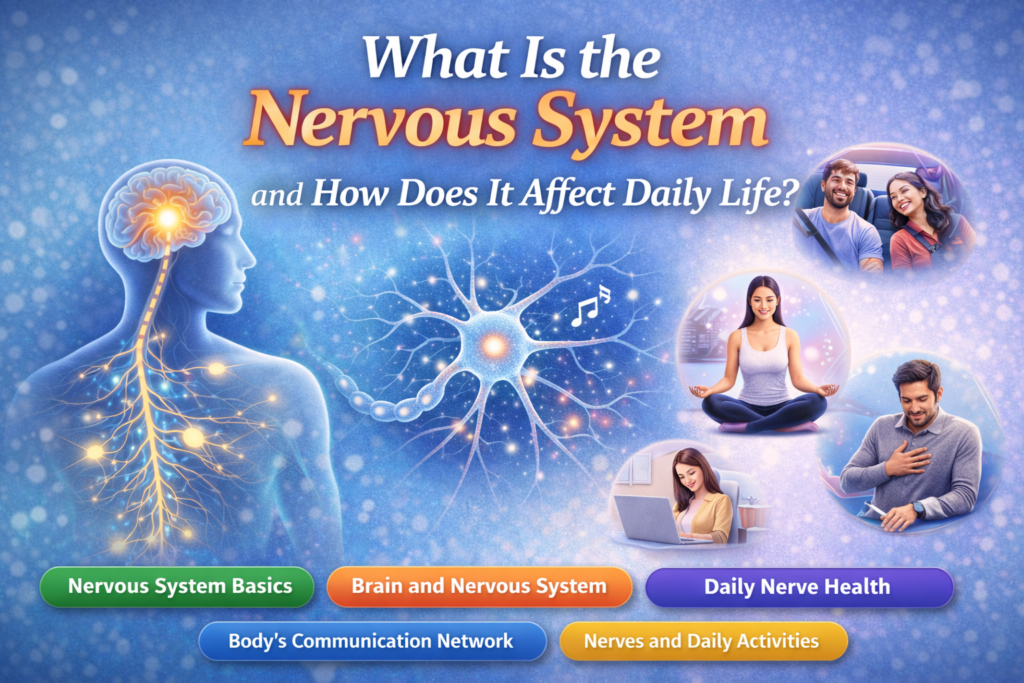
Among the most vital topics in health education is nervous system literacy. Understanding What Is the Nervous System and How Does It Affect Daily Life? opens a profound gateway into how humans think, feel, move, and heal.
The nervous system is the body’s command center. Comprising the brain, spinal cord, and peripheral nerves, it governs sensation, cognition, emotion, and motor control. It also regulates involuntary functions such as heart rate, digestion, and respiration.
This system operates through two primary branches:
- The sympathetic nervous system, which mobilizes energy for action and alertness
- The parasympathetic nervous system, which facilitates rest, digestion, and repair
In healthy individuals, these systems alternate fluidly. Modern life, however, often traps people in a chronic sympathetic state—constant vigilance, elevated stress hormones, shallow breathing.
Over time, this imbalance manifests as fatigue, anxiety, digestive disturbances, weakened immunity, and impaired concentration.
Health education teaches how to recognize these signals and restore equilibrium.
Daily Life Through a Neurological Lens
Every experience is filtered through the nervous system. The way someone reacts to stress, processes information, or recovers from exertion is deeply neurological. Even posture and breathing patterns influence neural signaling.
Health education reveals how simple practices can recalibrate this system:
- Slow, diaphragmatic breathing to stimulate the vagus nerve
- Gentle movement to enhance proprioception and circulation
- Exposure to natural light to regulate circadian rhythms
- Mindfulness techniques to quiet cortical overstimulation
Short pauses help. Long-term consistency heals.
By understanding What Is the Nervous System and How Does It Affect Daily Life?, individuals begin to see how their internal state shapes external outcomes. Emotional regulation improves. Sleep deepens. Energy stabilizes.
Knowledge becomes embodied.
Preventive Care Begins with Neural Awareness
Reactive healthcare addresses symptoms. Health education emphasizes prevention.
When people learn to identify early signs of nervous system dysregulation—persistent tension, racing thoughts, digestive discomfort—they gain the opportunity to intervene before chronic conditions develop. This proactive mindset transforms wellness into a daily practice rather than a crisis response.
Health education encourages routines that support neural resilience:
- Regular sleep-wake cycles
- Nutrient-dense meals rich in omega-3s and magnesium
- Physical activity that balances strength and mobility
- Digital boundaries to reduce cognitive overload
These habits protect neural pathways and foster adaptive stress responses.
Small changes. Significant impact.
Nutrition, Movement, and the Neural Network
A cornerstone of health education is understanding how lifestyle inputs affect neurological function. Food influences neurotransmitter production. Movement enhances neuroplasticity. Hydration supports electrical conductivity within nerve cells.
Highly processed diets and sedentary habits impair these processes, contributing to brain fog and emotional volatility. In contrast, whole foods, regular exercise, and restorative rest nourish the nervous system.
Health education highlights the value of:
- Leafy greens for folate and cognitive support
- Healthy fats for myelin sheath integrity
- Protein for neurotransmitter synthesis
- Fermented foods for gut-brain communication
The gut and brain maintain a constant dialogue. When digestion falters, mental clarity often follows.
Education transforms eating into intentional nourishment.
Emotional Health as a Biological Imperative
Chronic stress is not merely psychological—it is physiological. Prolonged activation of stress pathways alters neurotransmitter balance, inflames tissues, and compromises immune surveillance.
Health education introduces practices such as journaling, breathwork, and contemplative movement to downregulate stress responses. These tools activate the parasympathetic system, encouraging cellular repair and emotional stability.
Stillness becomes medicine.
So does connection.
Community-based learning environments reinforce healthy behaviors, fostering social support and shared accountability. Humans thrive in cooperative ecosystems.
From Information to Integration
True health education moves beyond theory. It emphasizes integration—transforming insight into lived experience. Individuals learn to evaluate health information critically, observe their own responses, and refine daily habits accordingly.
Understanding What Is the Nervous System and How Does It Affect Daily Life? exemplifies this approach. It empowers people to adjust posture, breathing, sleep, and stress management with precision and purpose.
Curiosity replaces confusion.
Agency replaces dependence.
Health Education as a Lifelong Practice
Health education evolves across the lifespan. Children learn foundational habits. Adolescents explore emotional resilience. Adults focus on stress regulation and prevention. Older populations prioritize mobility, cognition, and nervous system stability.
At every stage, the goal remains constant: informed choice.
Health education is not static. It adapts with new research. It deepens with reflection. Most importantly, it nurtures a respectful relationship with the body’s innate intelligence.
Knowledge becomes empowerment.
Empowerment becomes action.
Action, sustained over time, becomes well-being.
In an era of relentless stimulation and mounting demands, health education offers a pathway back to balance. It teaches individuals to listen inward, regulate their nervous systems, and design lives rooted in awareness—where clarity guides behavior, and vitality becomes a daily, intentional achievement.